
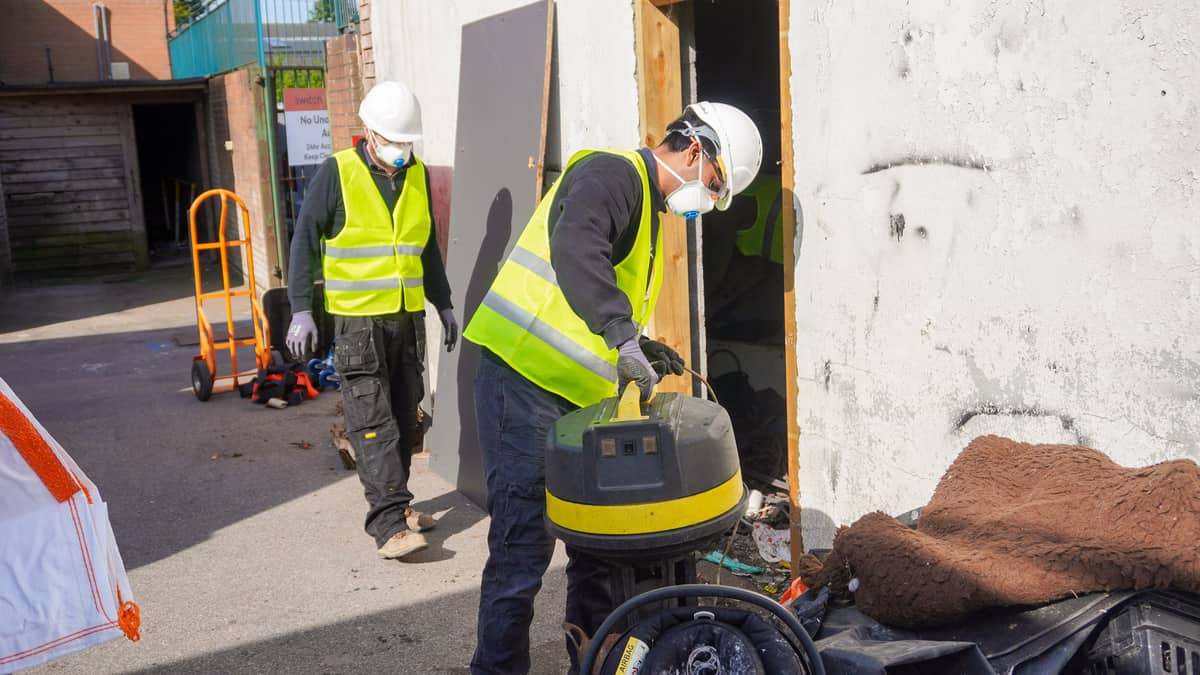
What counts as hazardous household waste
More of the garage than most people expect. The usual finds in a Bristol clearance are:
- Paint and varnish, both water-based and oil-based, while still liquid
- Solvents and thinners: white spirit, turpentine, brush cleaner
- Engine oil, lubricants and automotive fluids
- Garden chemicals: weedkiller, pesticide, concentrated feed
- Strong cleaning products: drain cleaner, oven cleaner, bleach in quantity
- Adhesives, resins and sealants
- Aerosols and gas canisters, including camping gas and old fire extinguishers
None of it belongs in a household bin, a recycling box or a skip. Most of it has been on the same shelf since a decorating job that finished years ago.
Where it can go
Bristol's reuse and recycling centres accept household hazardous waste from residents at dedicated points. Check the current arrangements before loading the car: sites, hours and booking requirements change, and turning up with a boot of solvent to a closed gate is a bad afternoon.
Before that, though, check whether it needs to be waste at all. Paint in a sound tin that is still usable can go to a community reuse scheme, where it is redistributed to community projects and people who need it. The Community RePaint network runs schemes that take usable paint and pass it on, and a shelf of half-full tins is a donation far more often than it is a disposal problem.
Moving it without making it worse
If you are taking it somewhere yourself, a few things matter more than they sound. Keep every container upright and the lids tight. Never decant one chemical into another container, and never mix two. Keep the load in a tray or a box so a leak stays contained, ventilate the car, and keep it away from anything you are going to eat.
And whatever the temptation, nothing goes down a drain or into a garden. A drain in Bristol leads to a watercourse sooner than most people assume, and pouring solvent into one turns a tidying job into an environmental offence.
Asbestos is a different question entirely
Anything built or altered before 2000 can contain it, and it hides in exactly the places a clearance goes: garage roof sheets, pipe lagging, old floor tiles, some artex, the panel behind a boiler.
If you suspect it, stop and leave it alone. Do not break it, bag it, sweep it or move it to see it better. Undisturbed asbestos is not the danger; disturbing it is. There are strict rules about who may remove what, and the HSE guidance sets them out. We work around a suspected material rather than touch it, and we would far rather hear about it at the enquiry than meet it in a loft.

