
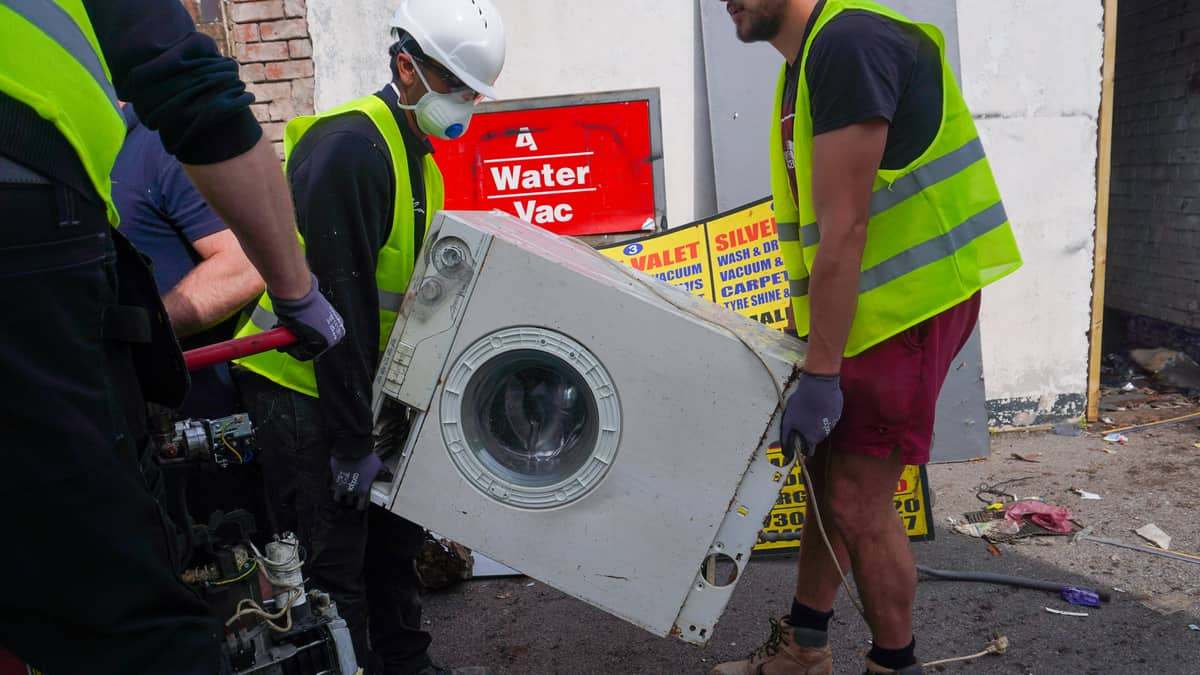
Why electricals are treated separately
Anything with a plug, a battery or a charging port falls under the UK's electrical waste rules (WEEE, for waste electrical and electronic equipment). The requirement is straightforward: electricals are collected separately from general waste and processed at facilities equipped to recover the materials and handle the hazardous parts. GOV.UK sets out the responsibilities.
The reason is partly the valuable metal inside and partly the risk. Lithium batteries that are crushed in a collection lorry or a sorting hall start fires, and a surprising share of waste-industry fires begin with a vape, a power bank or a laptop that should never have been in the bin.
Where it can go in Bristol
Reuse and recycling centres. Bristol's centres take electrical items from residents, from a phone to a television. Check current opening hours and whether the site expects a booking before you set off.
Retailer take-back. Large electrical retailers must accept small electrical items, and must offer to take away your old appliance when you buy the equivalent new one. That offer is made at the point of sale, so ask when you order rather than when it arrives.
Reuse, if it still works. A working laptop or tablet is worth more to somebody than to a recycling process, and there are organisations that refurbish devices for people who cannot afford one. Wipe it properly first.
Wipe it before it leaves the house
This is the part people skip. A phone, a tablet, a laptop, an external drive, an old router, even a printer with a memory in it: all of them can leave your house holding your data.
- Phones and tablets: sign out of the accounts, then a full factory reset.
- Computers: the built-in reset, or a secure wipe tool if you want to be thorough.
- Drives that held anything sensitive: destroy them physically. A wipe you cannot verify is not a wipe.
- Memory cards and USB sticks: they count too, and they are the easiest to forget.
Do it while the device is still in your hands. Once it has gone into a van, a bay or a shop's take-back bin, the decision has been made for you.
Electricals in a clearance
In a house clearance the electricals are rarely the ones in daily use. They are the two televisions in the loft, the desktop from 2011 in the garage, the printer nobody replaced the cartridge for, and a drawer of cables. All of it is separated from the general load and sent to a facility that handles electrical waste.
If you are clearing a property with a lot of it (an office, or a house where someone kept every machine they ever owned), say so at the enquiry. It changes how the load is planned, not whether we will take it.

